How it works
Ammonia absorption refrigeration system
Principle of ammonia absorption refrigeration
Refrigeration is a thermodynamic process that consists of extracting heat from a system in order to lower its temperature. In modern industrial installations, this function is most commonly provided by mechanical compression systems, which are highly dependent on electricity. However, an alternative technology exists—older in principle, yet increasingly relevant today: ammonia absorption refrigeration. This technology relies primarily on the use of heat as an energy source and on the properties of ammonia, a highly efficient natural refrigerant.
In an absorption refrigeration system, the mechanical compressor is replaced by a thermochemical cycle operating with two main working fluids: ammonia, which provides the cooling effect, and water, which acts as the absorbent.
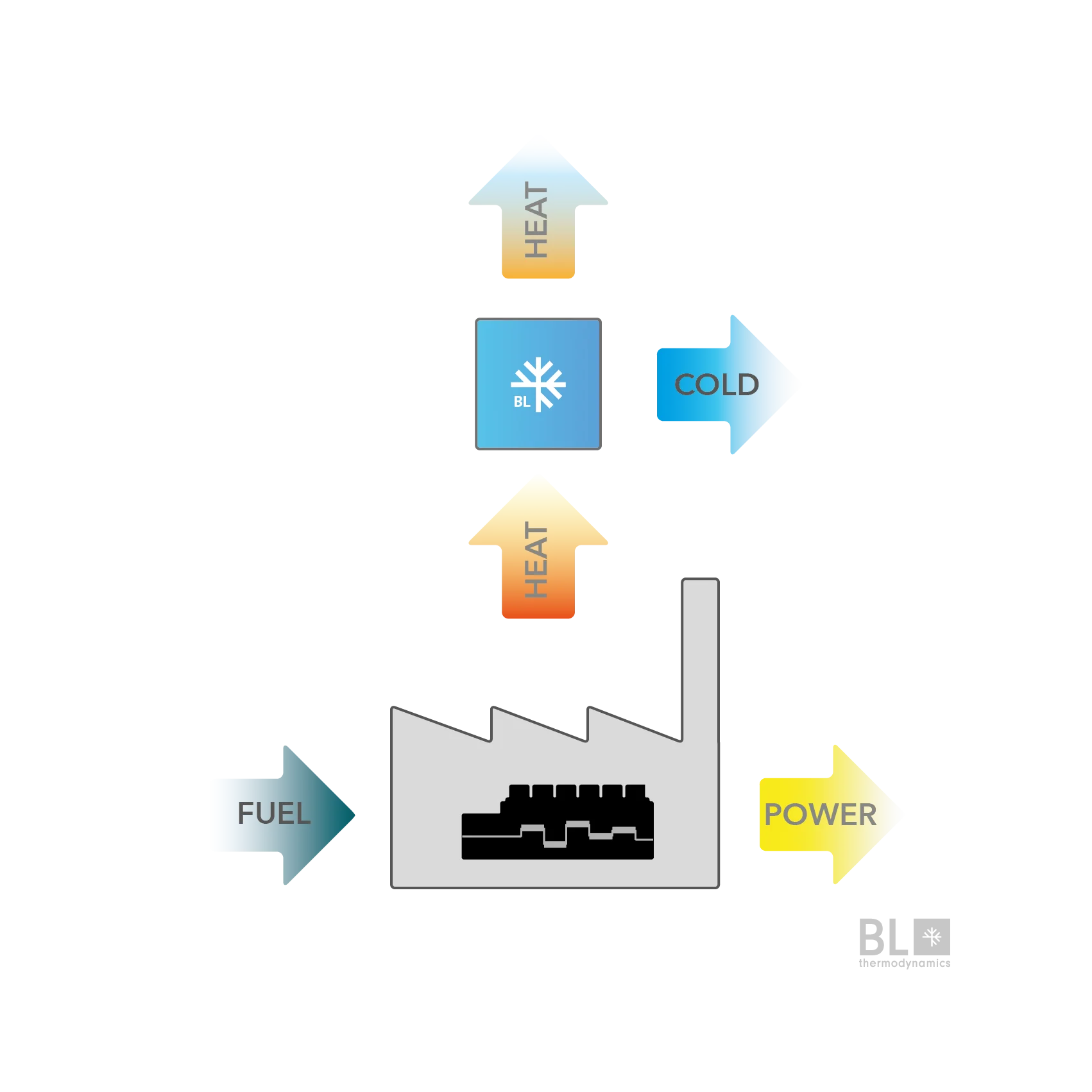
Water has a strong affinity for ammonia vapor at low pressure, enabling the replacement of mechanical compression by an absorption process. The energy normally required to compress the refrigerant is therefore supplied in the form of heat, allowing thermal energy to be directly converted into refrigeration capacity.
How the absorption cycle works
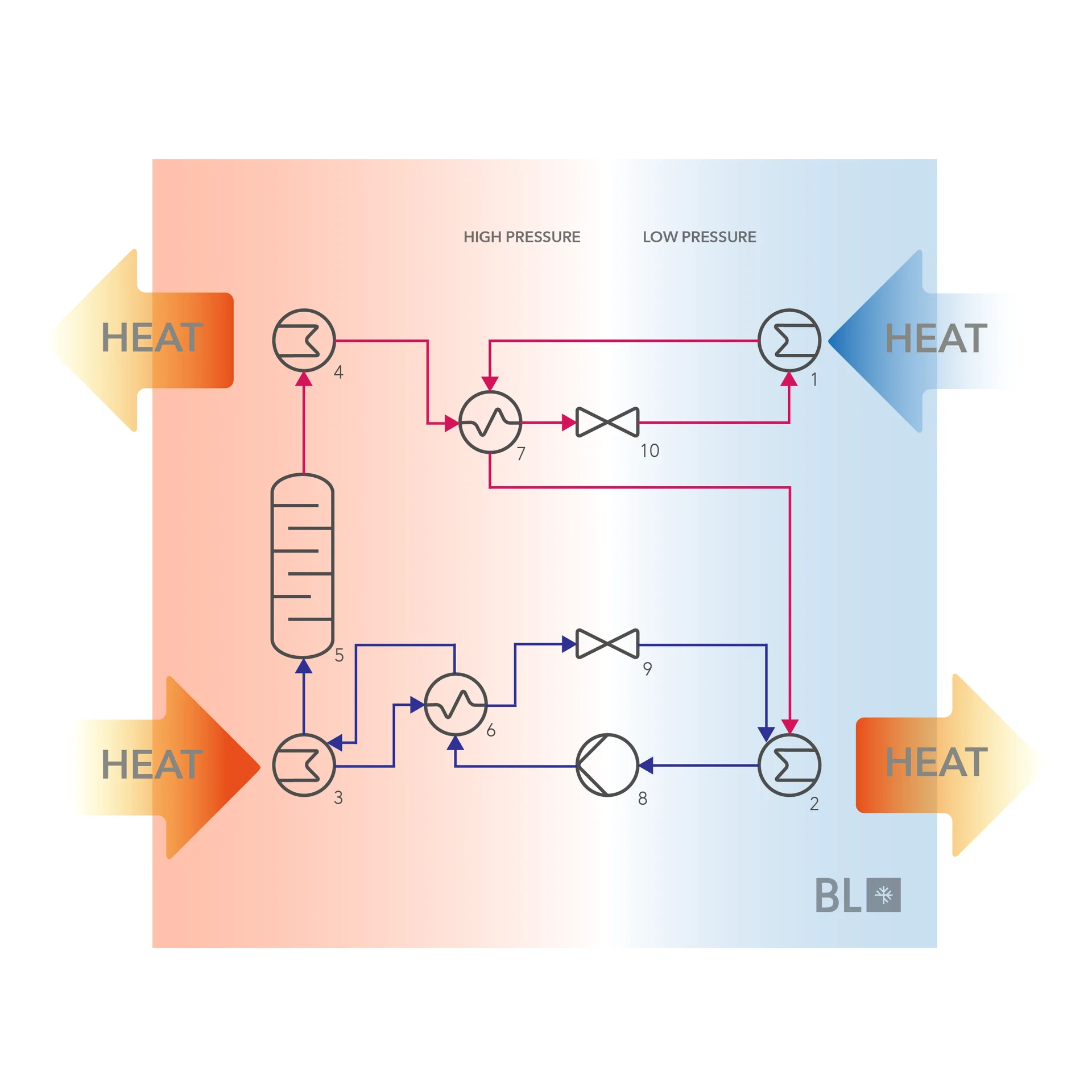
The ammonia absorption refrigeration cycle is based on the interaction between a refrigerant, ammonia, and an absorbent, water. Ammonia evaporates at low pressure, absorbing heat from the system to be cooled, enabling the production of cold at very low temperatures, down to -70°C. The ammonia vapor is then absorbed by a water–ammonia solution, a process that releases heat which must be dissipated to ensure stable operation.
The ammonia-rich solution is subsequently heated to separate ammonia from water. This step, powered by a heat source(often the one that we want to reuse), regenerates the refrigerant without the need for mechanical compression. The ammonia is then condensed and expanded before starting a new refrigeration cycle. Thanks to this principle, absorption refrigeration efficiently converts thermal energy into cooling capacity with low electricity consumption.
Advantages of ammonia absorption refrigeration
Ammonia absorption refrigeration offers numerous advantages. Ammonia is a natural refrigerant that does not deplete the ozone layer and does not contribute to the greenhouse effect. Its very low boiling point allows the system to reach particularly low refrigeration temperatures, down to -70°C. The absence of a mechanical compressor reduces friction, noise, and wear, improving the reliability and lifespan of the installation.
Additionally, ammonia’s characteristic odor provides a safety benefit, as any leak can be immediately detected.
The efficiency of an absorption refrigeration system is expressed by the coefficient of performance (COP), which is the ratio of the cooling capacity produced to the thermal energy supplied to the desorber. This coefficient mainly depends on the temperature of the heat source, the temperature of the cooling system, and the evaporation temperature. This ratio is often high due to the significant temperature differences between the hot and cold parts of the system.
Electrical consumption, which is primarily limited to the operation of the solution pump, represents a very small fraction of the total energy and has only a marginal impact on the overall system efficiency.